Microsoft Dynamics 365 Business Central Implementation Partner

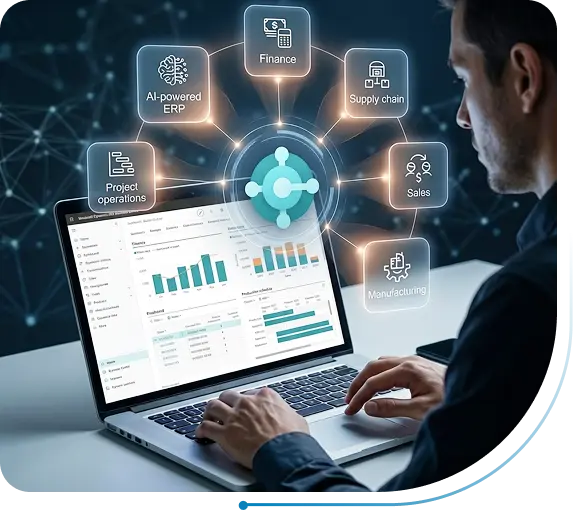
Microsoft Dynamics 365 Business Central ERP is a modern, cloud-based ERP solution designed to unify finance, supply chain, sales, manufacturing, and project operations within a single intelligent platform.

With embedded intelligence and automation, it operates as a true AI-powered ERP, helping leadership shift from reactive reporting to proactive decision-making.

Dynamics 365 Business Central ERP

How limited visibility holds back growth

As organizations scale, fragmented systems and disconnected data create measurable risk.

Small inefficiencies quickly escalate into margin erosion, missed revenue opportunities, and compliance vulnerabilities. Adding isolated tools to legacy systems increases complexity, keeping leadership reactive instead of strategic. These risks include:

Finance teams struggle with dispersed data

Inventory and supply chain metrics lack consistency

Executive decisions rely on outdated reports

This is where an AI-powered ERP becomes critical, transforming disconnected data into predictive insight across the enterprise.

How Microsoft Dynamics 365 Business Central ERP optimizes operations

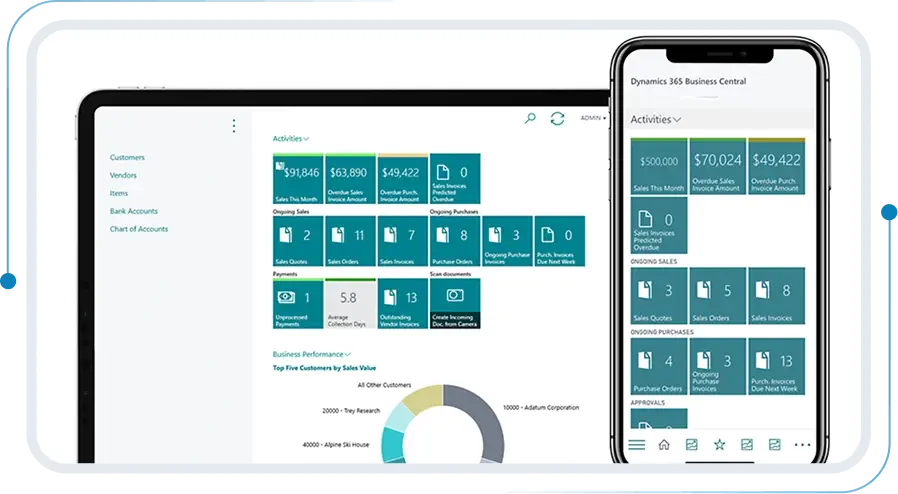
As a modern, AI-powered ERP, the Microsoft Dynamics 365 Business Central solution includes services across the entire spectrum of business functions, including finance, supply chain, sales, service, and project management within a secure cloud environment. It is a scalable system built on Microsoft Azure and enhanced with Microsoft Copilot to deliver real-time visibility, automation, and advanced forecasting.

erp microsoft business central

With this data model and standardized processes:

Finance leaders gain instant cash flow and margin visibility

Operations teams track inventory and resources accurately

Governance becomes proactive rather than reactive

Embedded AI enhances forecasting, variance detection, and scenario planning

Moving to Business Central is not just a software upgrade; it gives leadership real-time financial and operational control.

Key capabilities and outcomes to expect with Microsoft Dynamics 365 Business Central ERP

Financial management

Capabilities:
General ledger, budgeting, cash flow management, fixed asset tracking, automated account schedules, audit trails, and reporting through the Power BI platform for enhanced financial insights and data visualization.

Outcomes:

  • Month-end close cycles reduced by up to 60%
  • Clear visibility into cash flow and profitability
  • Strong audit readiness through automated controls

Sales and customer management

Capabilities:
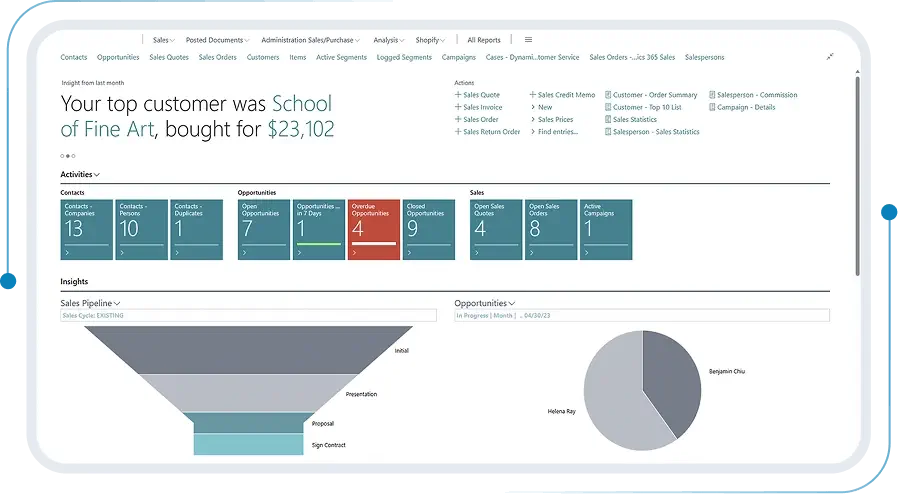
Opportunity and quote management, pricing, contract management, and order-to-cash integration with Microsoft 365 and Outlook.

Outcomes:

  • Faster sales cycles
  • Accelerated revenue realization
  • Increased billing accuracy and order fulfilment reliability

Project and job costing

Capabilities:
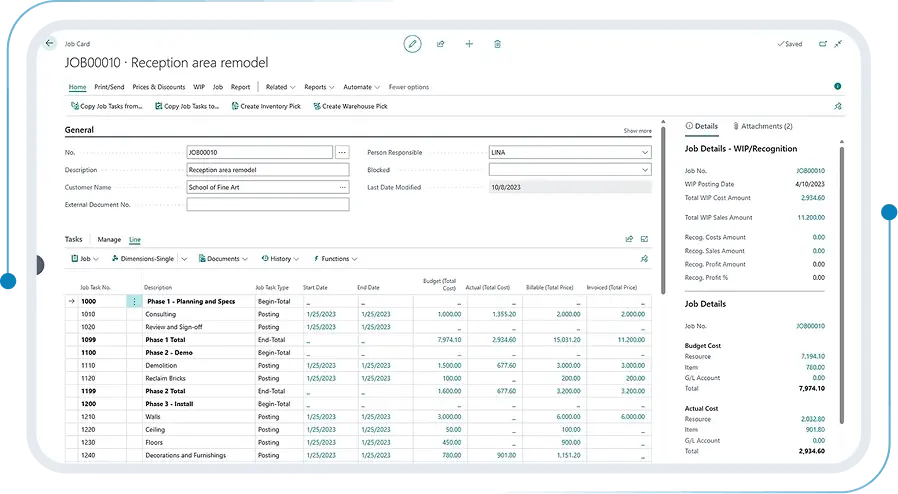
Budgeting, work-in-progress tracking, resource allocation, and profitability analysis.

Outcomes:

  • Enhanced margin governance
  • Early detection of cost overruns
  • Improved project delivery and resource utilization

Warehouse and manufacturing

Capabilities:
Bill of materials (BOM) management, routing, capacity planning, production orders, MRP, and shop floor control.

Outcomes:

  • Optimized production throughput
  • Improved capacity utilization
  • Stronger operational cost control

Unified data, analytics, and AI

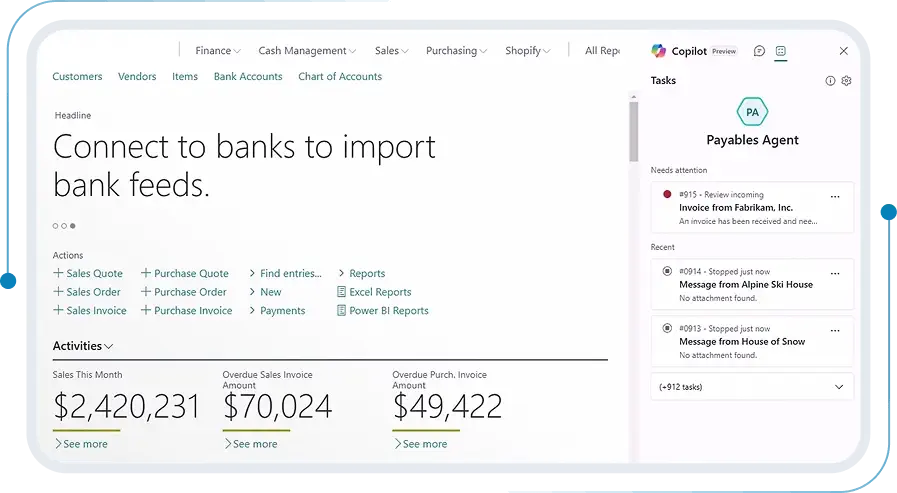
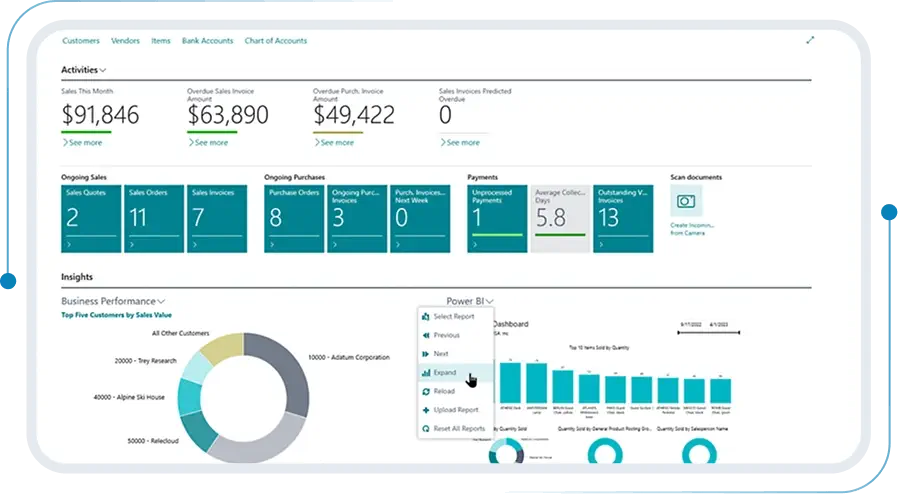
As an AI-powered ERP, Microsoft Dynamics 365 Business Central integrates Microsoft Copilot solutions, cross-module analytics, and Power BI dashboards to enable intelligent forecasting, anomaly detection, and more informed decision-making.

Capabilities:
Predictive forecasting, variance alerts, cross-functional analytics, and executive dashboards.

Outcomes:

  • Proactive, data-driven decisions
  • Faster financial reporting
  • Reduced analytical workload for leadership
  • Greater predictability in financial performance

Security, compliance, and governance

Capabilities:
Enterprise-grade Azure security, role-based access controls, audit history, automated updates, and business continuity safeguards.

Outcomes:

  • Strengthened regulatory compliance
  • Reduced audit and risk exposure
  • Secure, resilient infrastructure for long-term growth

Modules within Microsoft Dynamics 365 Business Central

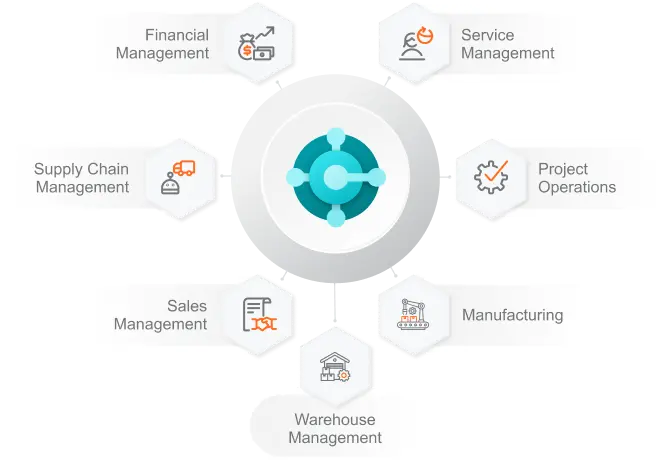
Microsoft Dynamics 365 Business Central ERP is designed as a modular ERP, enabling organizations to adopt only the functionalities they need while ensuring seamless integration across all operations. Each module works together to provide a single source of truth, streamline processes, and improve visibility across the enterprise.

Key modules and highlights:

Modules within Microsoft Dynamics 365 Business Central

Finance

Manage general ledger, accounts payable/receivable, cash flow, budgeting, and fixed assets with real-time reporting and automated controls.

Supply Chain

Track inventory, automate replenishment, manage vendors, and optimize procurement to reduce stockouts and excess inventory.

Sales

Handle quotes, opportunities, orders, and pricing efficiently while integrating seamlessly with Microsoft 365 and Outlook for faster deal closure.

Service Management

Schedule resources, track service contracts, and monitor service-level agreements (SLAs) to deliver exceptional customer service.

Project Operations

Plan projects, allocate resources, track work-in-progress, and analyze profitability to ensure projects stay on time and on budget.

Manufacturing

Control bills of materials (BOM), routing, production orders, capacity planning, and shop floor activities for optimized production efficiency.

Warehouse Management

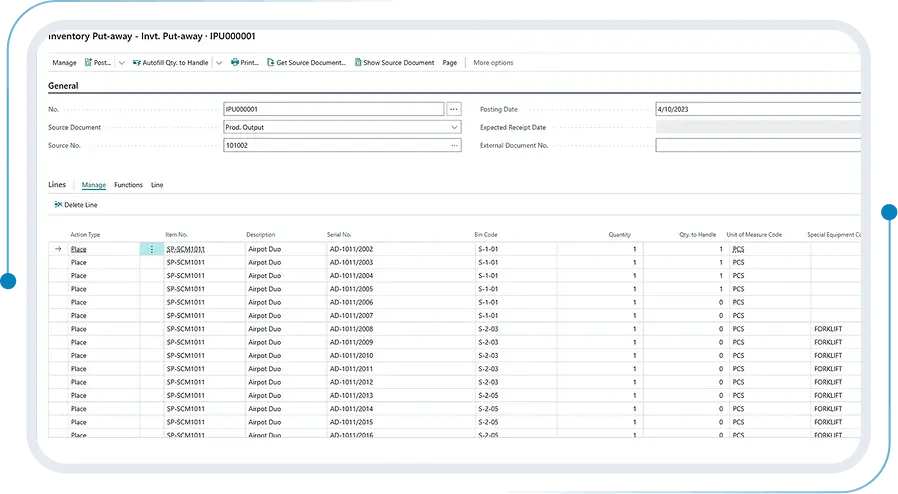
Improve warehouse operations with inventory tracking, automated replenishment, picking/packing workflows, and real-time stock visibility.

Each module integrates seamlessly, providing organizations with consistent data, actionable insights, and enterprise-wide control, turning Business Central into a centralized hub for smarter, data-driven decisions.

Benefits of adopting Microsoft Dynamics 365 Business Central ERP

Real-time visibility

Single source of truth for finance and operations

Operational efficiency

Automated workflows reduce manual effort

Predictable financial outcomes

AI-powered ERP forecasting improves planning accuracy

Scalability

Cloud architecture supports expansion into new markets

Enhanced collaboration

Deep Microsoft 365 integration

Security and compliance

Azure-native protection ensures data integrity

Client success stories with sa.global

Logindo

Result: 75% faster month-end close after implementing Dynamics 365 Business Central.

Impact: Streamlined finance processes and real-time visibility across subsidiaries.

Chillibreeze

Result: Unified Finance, Sales, and Project modules into a single system.

Impact: Improved operational efficiency, reduced errors, and measurable savings.

A US-based Dynamics NAV client

Result: Migrated from Dynamics NAV to Dynamics 365 Business Central ERP.

Impact: Consolidated financial reporting, enhanced inventory management, and improved enterprise-wide data access.

All three clients achieved measurable operational and financial impact, demonstrating Business Central’s transformational value. These results reflect the measurable impact of deploying an AI-powered ERP platform built for intelligent growth.

Licensing and cost overview

Understanding Microsoft Dynamics 365 pricing is an important part of planning your Business Central implementation. Licensing for Microsoft Dynamics 365 Business Central is flexible and role based. Pricing depends on:

  • User type (Essentials, Premium, Team Members)
  • Modules and functionality required
  • Cloud or on-premises deployment
  • Integration with Microsoft 365 and Power Platform

Organizations typically begin with a structured licensing consultation or solution assessment to align deployment with business goals.

Choosing the right Business Central partner is essential for a successful implementation and long-term business growth.

dynamics 365 business central ERP: Licensing and cost overview
unnamed-file.png

Three months into the implementation and our accounting team is pleased with the efficiency, outcomes, and potential of this interconnected platform. Business Central will save us time, make us efficient, and eventually give us reporting through Power BI. I believe that this tool will give visibility to all and help Chillibreeze measure the value creation; and that is the pathway to growth.

Joanna Budelman,
Co-Founder
Chillibreeze Solutions Pvt Ltd

Why partner with sa.global?

Global delivery across 80+ countries

Accelerated implementation frameworks

Industry expertise in construction, manufacturing, professional services, and distribution

Outcome-focused methodologies with measurable business value

24/7 managed services and post-go-live optimization

As an experienced Dynamics 365 Business Central partner, sa.global combines deep expertise with a collaborative delivery approach that ensures adoption, confidence, and long-term operational excellence.

Talk to our Business Central expert

FAQs

What is Microsoft Dynamics 365 Business Central ERP used for?

For organizations considering Microsoft Dynamics 365 Business Central ERP, it is a unified ERP platform used to manage finance, supply chain, sales, manufacturing, service, and project operations within a secure cloud-based system.

The Microsoft Dynamics 365 Business Central differs from traditional ERP systems by combining unified financial and operational management with cloud scalability, embedded AI, and seamless integration across the Microsoft ecosystem.

Yes. It integrates finance and operations without the complexity of Tier-1 ERP systems.

Typically, three to nine months depending on scope, integrations, and data readiness. Accelerated frameworks can shorten timelines.

Yes. Native integration supports collaboration, reporting, and advanced analytics.

Yes. Structured migration methodologies ensure accurate data transition and modernized controls.

Managed services, optimization programs, compliance monitoring, and structured upgrade planning are available post-implementation.