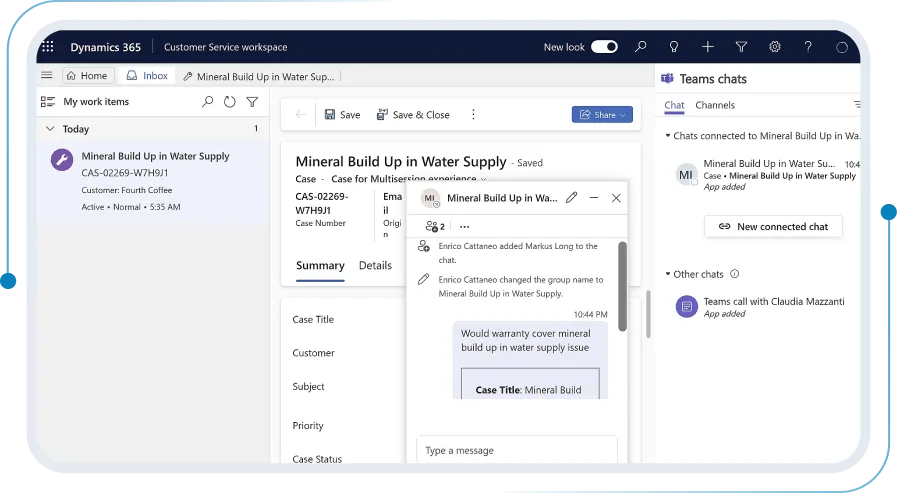
What is Microsoft Dynamics 365 Customer Engagement?

Microsoft Dynamics 365 Customer Engagement is a cloud-based customer relationship management (CRM) solution designed to help organizations optimize client interactions, accelerate sales performance, and deliver exceptional service experiences at scale.

By combining CRM capabilities with AI-powered automation and analytics, Microsoft Dynamics 365 Customer Engagement enables businesses to deliver personalized customer experiences, improve forecasting accuracy, and strengthen operational governance across departments.

Microsoft Dynamics 365 Customer Engagement

How disconnected systems and limited customer visibility impact business growth

Many organizations struggle with disconnected customer data spread across multiple systems, spreadsheets, and legacy CRM platforms. Sales teams may track opportunities in one system, marketing teams manage campaigns in another, and service teams rely on separate tools to resolve customer issues. This fragmented environment prevents organizations from maintaining a complete view of the customer journey.

Manual processes and outdated reporting methods further complicate operations. Without real-time insights into customer activity and pipeline performance, leaders often rely on delayed reports that limit their ability to respond to market changes or customer needs quickly.

Common challenges include:

Disconnected sales, marketing, and service platforms

Limited visibility into customer interactions and engagement history

Manual data entry and inefficient workflows

Inconsistent reporting across departments

Poor forecasting accuracy and pipeline transparency

This is where working with an experienced Dynamics 365 Customer Engagement partner becomes critical, helping organizations unify customer data, streamline processes, and gain real-time visibility across the entire customer lifecycle.

Unify Customer Data, Teams, and Processes with Dynamics 365 Customer Engagement

Microsoft Dynamics 365 Customer Engagement helps organizations modernize customer-facing operations by bringing together data, processes, and teams within a single intelligent platform. By centralizing information across sales, marketing, and service functions, businesses gain a unified view of customer interactions and engagement history. This enables teams to collaborate more effectively, respond faster to customer needs, and deliver consistent experiences throughout the entire client journey.

Key capabilities that drive this transformation include:

Key capabilities: Dynamics 365 Customer Engagement

Unified customer data

Consolidates information from multiple systems to eliminate silos and provide a complete 360-degree customer view.

Automated business processes

Streamlines repetitive tasks such as lead qualification, campaign execution, case routing, and follow-ups, reducing administrative workload.

AI-powered insights and predictive intelligence

Uses advanced analytics to anticipate customer needs, improve sales forecasting, and uncover new revenue opportunities.

Real-time analytics and reporting

Interactive dashboards built on Microsoft Power BI enable leaders to monitor performance and make data-driven decisions quickly.

Enterprise-grade cloud infrastructure

Built on Microsoft Azure, the platform delivers scalability, security, and global availability for growing organizations.

AI productivity assistance with Microsoft Copilot

Helps employees generate insights, summarize customer interactions, and draft communications directly within the CRM workflow.

Together, these capabilities enable organizations to move beyond reactive customer management and adopt proactive, intelligent engagement strategies that improve operational efficiency and long-term customer value.

The sa.global diagnosis model gave us clarity in a very short time. Even before a deeper analysis, it provided the ideal foundation to make informed decisions on scope, priorities, and further investments. This is how any company should approach working with Dynamics 365 technology.

Key Microsoft Dynamics 365 CE capabilities and outcomes

Sales pipeline management

Capabilities:
Dynamics 365 Customer Engagement enables sales teams to manage opportunities, leads, and accounts through a structured pipeline. Automated workflows help prioritize high-value prospects while AI insights provide recommendations that improve conversion rates.

Outcomes:

  • Increased win rates through improved opportunity visibility
  • More accurate sales forecasting and revenue planning
  • Reduced administrative workload for sales teams
  • Faster deal cycles and improved pipeline velocity
Microsoft Dynamics 365 Customer Engagement: Sales pipeline management

Customer engagement and relationship management

Capabilities:

The platform consolidates customer data from multiple touchpoints to create a complete 360-degree customer profile. Teams can track interactions, preferences, and engagement history to deliver personalized communication and relationship management.

Outcomes:

  • Improved customer satisfaction and loyalty
  • Consistent engagement across channels
  • Enhanced cross-sell and upsell opportunities
  • Stronger long-term customer relationships
Microsoft Dynamics 365 Customer Engagement: Customer engagement and relationship management

Marketing automation

Capabilities:

Integrated marketing automation tools enable organizations to plan, execute, and measure targeted campaigns. Marketing teams can design customer journeys, segment audiences, and automate lead nurturing workflows.

Outcomes:

  • Higher campaign conversion rates
  • Improved marketing ROI through targeted engagement
  • Better alignment between sales and marketing teams
  • Data-driven campaign optimization
Microsoft Dynamics 365 Customer Engagement: Marketing automation

Service management

Capabilities:

Customer service teams can manage support cases, track service requests, and automate case routing using intelligent workflows. Knowledge management tools help service agents resolve issues quickly while maintaining consistent service quality.

Outcomes:

  • Faster case resolution times
  • Improved service agent productivity
  • Enhanced customer experience and satisfaction
  • Reduced operational costs in support operations
Microsoft Dynamics 365 Customer Engagement: Service management

AI insights and analytics

Capabilities:

Advanced analytics powered by Microsoft Power BI and AI models provide predictive insights into sales trends, customer behavior, and service performance. Leadership teams can monitor KPIs through interactive dashboards.

Outcomes:

  • Data-driven decision-making across departments
  • Improved forecasting accuracy
  • Identification of new growth opportunities
  • Greater operational transparency
Microsoft Dynamics 365 Customer Engagement: AI insights and analytics

Customer journey intelligence

Capabilities:

Dynamics 365 Customer Engagement provides tools to analyze and optimize the entire customer journey, from initial engagement to post-sale support. AI-driven recommendations help identify opportunities to enhance customer experiences.

Outcomes:

  • Improved customer journey consistency
  • Higher customer retention rates
  • Enhanced personalization in communication
  • Increased lifetime customer value
Microsoft Dynamics 365 Customer Engagement: Customer journey intelligence

Modules or core components within Dynamics 365 Customer Engagement

Microsoft Dynamics 365 Customer Engagement consists of several integrated modules designed to support end-to-end customer management.

Sales

Enables organizations to manage leads, opportunities, and pipeline performance while improving sales productivity through automation and AI-driven insights.

Customer Service

Provides case management, service automation, and knowledge base tools that allow service teams to resolve customer issues quickly and efficiently.

Marketing

Helps marketing teams create targeted campaigns, manage customer journeys, and track engagement metrics across channels.

Field Service

Supports organizations with service operations in the field by enabling scheduling, work order management, and resource optimization.

Customer Insights

Unifies customer data from multiple sources to deliver a 360-degree view of customer behavior and preferences.

Omnichannel Engagement

Allows organizations to engage customers through multiple channels, including chat, email, phone, and digital messaging platforms.

AI Copilot capability

Integrates Microsoft Copilot to provide intelligent assistance, automate tasks, and generate insights from CRM data.


Together, these modules create a comprehensive platform that supports unified operations, enterprise data visibility, and intelligent automation.

Benefits of adopting Dynamics 365 Customer Engagement

Organizations adopting Microsoft Dynamics 365 Customer Engagement gain a modern CRM platform that supports both operational efficiency and long-term digital transformation.

Key benefits include:

Benefits of adopting Dynamics 365 Customer Engagement

360-degree customer visibility

Unified customer profiles combine sales, marketing, and service interactions in a single platform.

Sales productivity

AI-assisted opportunity management, lead scoring, and pipeline tracking help sales teams close deals faster.

Personalized marketing engagement

Data-driven segmentation and campaign automation enable targeted, omnichannel customer journeys.

Proactive customer service

Case management, knowledge bases, and AI-driven insights help support teams resolve issues quickly.

Relationship intelligence

Built-in analytics surface engagement trends, helping teams identify opportunities to strengthen customer relationships.

Cross-team collaboration

Shared customer data across sales, marketing, and service improves coordination and customer experience.

AI-driven forecasting

Predictive insights support more accurate sales forecasting and pipeline management.

Scalable customer engagement platform

Cloud-based architecture supports growing customer data volumes, channels, and engagement models.

These advantages enable organizations to build stronger customer relationships while improving operational performance across the enterprise.

Licensing and cost overview of Dynamics 365 Customer Engagement

The Microsoft Dynamics 365 Customer Engagement pricing model varies depending on several factors, including:

User roles and licensing tiers

Selected modules and applications

Integration requirements with other Microsoft systems

Deployment scale and geographic footprint

Customization and implementation scope

Because each organization’s requirements differ, the most effective way to determine the right licensing structure is through a structured solution assessment with a Dynamics 365 Customer Engagement partner.

A consultation helps align licensing with operational requirements while ensuring long-term scalability and cost efficiency.

Licensing and cost overview of Dynamics 365 Customer Engagement

Why partner with sa.global?

Organizations selecting a Dynamics 365 Customer Engagement implementation partner need expertise that extends beyond implementation.

dynamics 365 customer engagement partner

Recognized Microsoft partner expertise across the Dynamics ecosystem

Global delivery capability supporting multi-region implementations

Deep industry specialization across professional services and enterprise organizations

Accelerated implementation frameworks that reduce deployment timelines

Outcome-driven methodology focused on measurable business impact

24/7 managed services and ongoing optimization support

This combination of strategic advisory, technical expertise, and managed services helps organizations maximize the value of their Microsoft technology investments.

FAQs

What is Microsoft Dynamics 365 CE used for?

Microsoft Dynamics 365 Customer Engagement is a CRM solution designed to manage sales, marketing, and customer service operations while providing a unified view of the customer lifecycle. By centralizing customer interactions, organizations can improve relationship management, streamline workflows, and deliver personalized experiences across all touchpoints.

Microsoft Dynamics 365 Customer Engagement centralizes customer data, automates workflows, and provides AI-powered insights that help organizations improve productivity and decision-making. This allows teams to make faster, data-driven decisions, improve productivity, and enhance customer engagement across sales, marketing, and service channels.

Yes. Microsoft Dynamics 365 Customer Engagement is highly scalable and flexible, supporting both mid-sized businesses as well as large enterprises. Organizations can adopt only the modules they need initially, and scale up as business requirements grow, often with the guidance of a certified Dynamics 365 Customer Engagement partner.

Implementation timelines for Microsoft Dynamics 365 Customer Engagement vary depending on the number of modules, integrations, and customization requirements. Many organizations complete deployments within several weeks to a few months, especially when working with an experienced Dynamics 365 Customer Engagement partner to accelerate adoption and minimize disruption.

Yes. Microsoft Dynamics 365 Customer Engagement integrates with Microsoft Azure, Microsoft 365, Power BI, Power Platform, and Microsoft Copilot. These integrations extend functionality, enabling enhanced reporting, workflow automation, and connected collaboration across all customer-facing teams.

Microsoft Dynamics 365 Customer Engagement pricing depends on several variables, including the number of users, selected modules (such as Sales, Customer Service, or Marketing), licensing tiers, integrations with other Microsoft solutions, and the level of customization required. Engaging a certified Dynamics 365 Customer Engagement partner can also help optimize costs by recommending the right configuration for your organization’s needs.

After deployment, organizations can access ongoing managed services, technical support, and optimization services through a certified Dynamics 365 Customer Engagement partner. This ensures continuous improvement, adoption of new features, and that the system evolves in line with changing business needs.