Microsoft Dynamics 365 Project Operations Implementation
Microsoft Dynamics 365 Project Operations is a cloud-native, intelligent project and resource management solution designed to unify project delivery, financials, and operations across the enterprise.
By combining project delivery with financial management in a scalable cloud environment, organizations can drive predictable outcomes, improve profitability, and accelerate digital transformation.
How fragmented systems and poor visibility limit business performance
Many project-centric organizations operate with disconnected tools for project management, finance, and resource planning. These fragmented systems create operational blind spots that hinder decision-making and reduce overall efficiency.
Common challenges include:

Siloed departments using separate systems for finance, HR, and project delivery

Manual processes for time tracking, invoicing, and reporting

Limited visibility into project profitability and resource utilization

Outdated reporting that lacks real-time insights

Inconsistent data leading to forecasting inaccuracies

Without a unified platform, organizations struggle to align project execution with financial outcomes. This gap ultimately limits agility, profitability, and long-term growth.
Microsoft Dynamics 365 Project Operations addresses these challenges by providing a single source of truth, transforming fragmented operations into intelligent, connected, and data-driven processes.
How Dynamics 365 Project Operations transforms business operations
Dynamics 365 Project Operations transforms how organizations manage projects by unifying data, automating workflows, and delivering real-time intelligence across the enterprise.
Key transformation drivers include:
Unified data model
Integrates project, financial, and operational data into a single platform
End-to-end automation
Streamlines project lifecycle processes—from planning to billing
Real-time reporting
Enables instant access to project performance and financial metrics
Predictive insights
Uses AI and machine learning to forecast risks, costs, and resource needs
AI-powered assistance
With Microsoft Copilot, users gain intelligent recommendations and automation
Scalable cloud infrastructure
Built on Microsoft Azure for enterprise-grade scalability and security
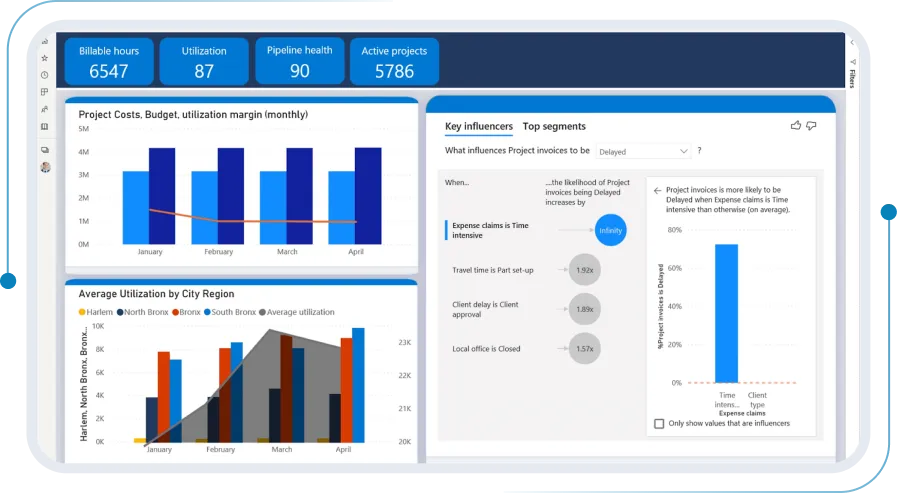
With embedded analytics powered by Microsoft Power BI, decision-makers gain actionable insights into project health, profitability, and performance, enabling proactive management rather than reactive correction.
Key capabilities and business outcomes with Dynamics 365 Project Operations
Improve deal management
Capabilities
Create accurate project estimates for labor, expenses, and materials while defining scope and structuring deals using flexible pricing models such as fixed price, time and materials, or retainers. Standardized templates help streamline quote creation and ensure consistency.
Outcomes
- Faster deal cycles and accelerated project initiation
- Improved estimation accuracy across cost components
- Consistent and scalable pricing strategies
- Increased win rates with structured, data-driven proposals
Increase productivity
Capabilities
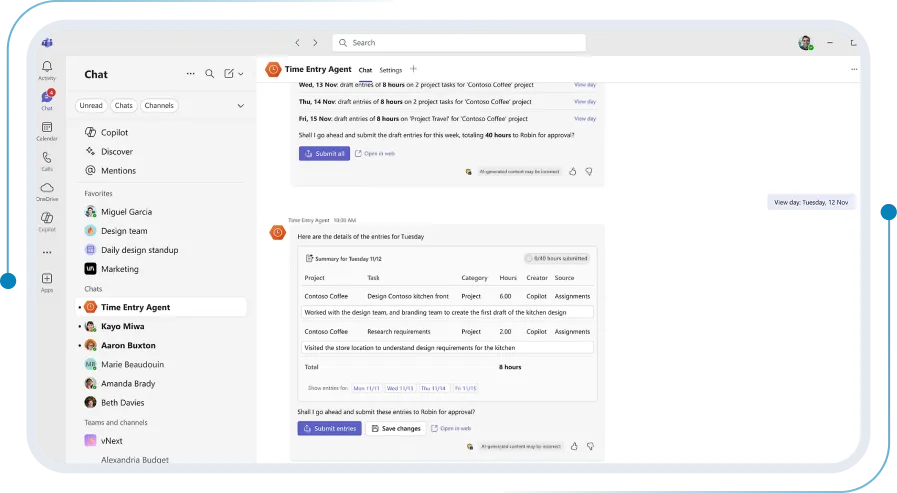
Automate time and expense capture, approvals, and billing processes using configurable workflows. Leverage AI-powered capabilities, including Copilot, to generate project plans, automate status reporting, identify risks, and improve forecasting.
Outcomes
- Increased productivity through automation and AI-assisted workflows
- Faster billing cycles and improved cash flow
- Reduced administrative overhead
- More accurate forecasting of timelines and costs
Optimize resource utilization
Capabilities
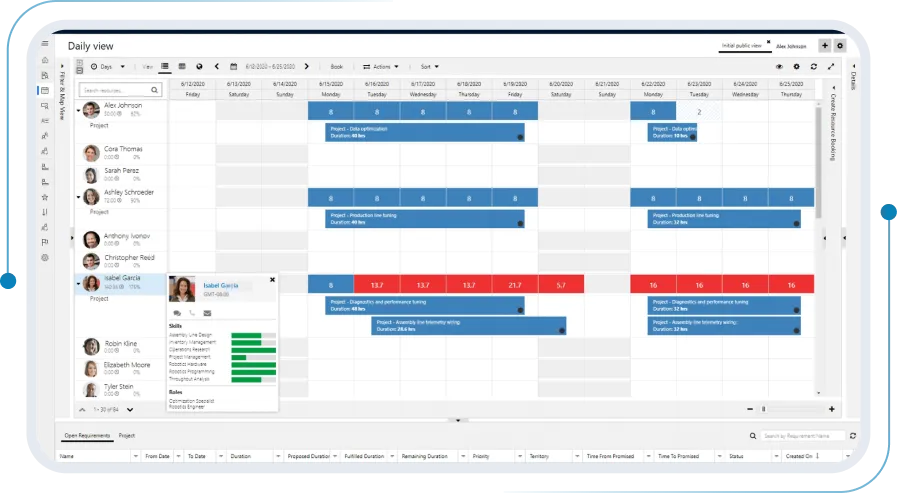
Maintain detailed resource profiles and assign the right people to the right projects based on skills, availability, and proficiency levels. Optimize workload distribution to maximize utilization.
Outcomes
- Optimized resource utilization across projects
- Improved workforce productivity and engagement
- Reduced bench time and over-allocation risks
- Better alignment of skills with project requirements
Simplify processes
Capabilities
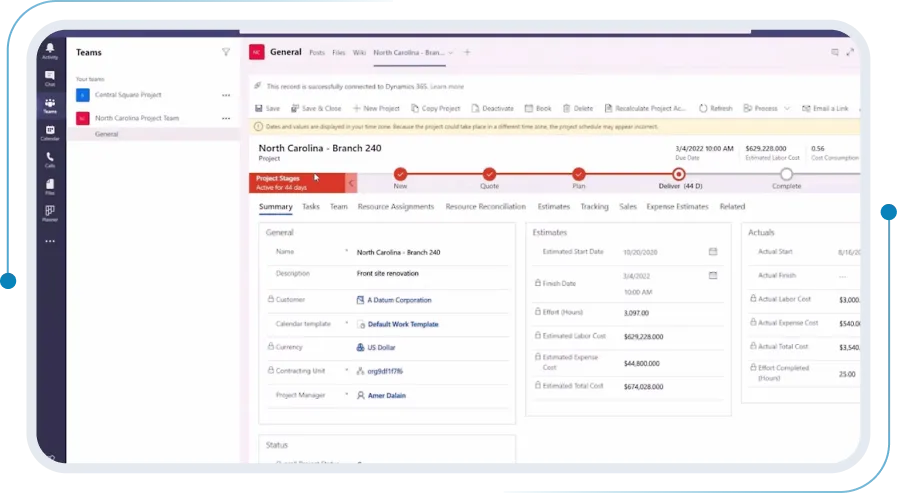
Streamline project execution by connecting teams, processes, and data in a unified workspace. Centralize project plans, documents, and communications while standardizing workflows across time, expense, and collaboration activities.
Outcomes
- Simplified and standardized project delivery processes
- Improved cross-functional collaboration
- Reduced communication gaps across departments
- Increased operational efficiency and consistency
Drive business performance
Capabilities
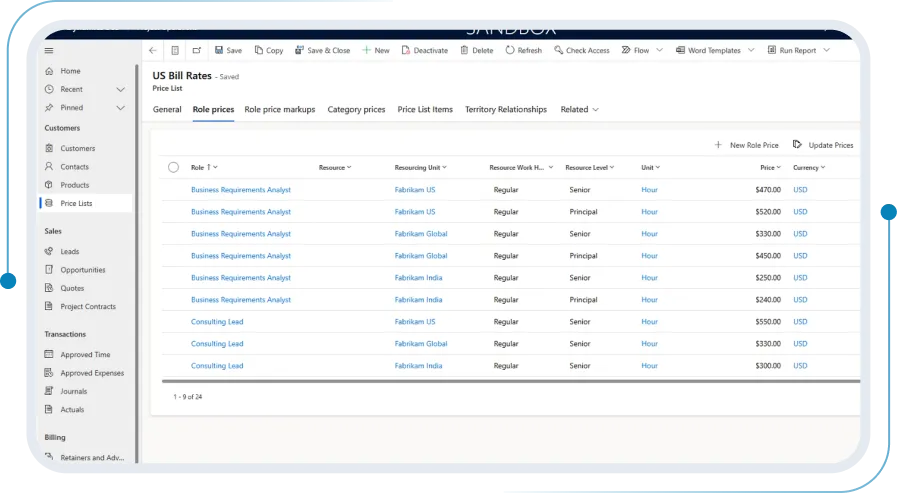
Track project budgets against actuals in real time, including labor, expenses, and materials. Support multiple billing methods and enable automated revenue recognition, accruals, and financial postings aligned with global standards.
Outcomes
- Improved project profitability and margin control
- Reduced budget overruns and cost leakage
- Accurate and compliant revenue recognition
- Stronger financial governance and audit readiness
Improve visibility
Capabilities
Leverage built-in dashboards and analytics to monitor project performance, resource utilization, and financial metrics. Use real-time insights to identify trends, risks, and opportunities, and adjust projects proactively.
Outcomes
- Enhanced visibility across the entire project lifecycle
- Early identification of risks and performance issues
- Data-driven decision-making at all levels
- Improved on-time and on-budget project delivery
Modules or core components within Dynamics 365 Project Operations
Microsoft Dynamics 365 Project Operations is built on a modular, yet tightly integrated architecture that connects project delivery, financial management, and operational intelligence within a single platform. Each component is designed to eliminate silos, standardize processes, and provide end-to-end visibility across the project lifecycle. Together, these modules enable organizations to operate with greater agility, accuracy, and control while scaling efficiently in a cloud environment.

Project Management
Enables end-to-end project planning, scheduling, and execution within a unified environment, ensuring alignment between scope, timelines, and deliverables.

Resource Management
Optimizes workforce allocation by matching skills, availability, and project requirements to maximize utilization and productivity.

Project Accounting
Provides financial visibility into project costs, revenue, and profitability, ensuring alignment with organizational financial goals.

Time and Expense Management
Automates time and expense tracking, approvals, and submissions to improve accuracy and streamline billing processes.

Billing and Revenue Recognition
Supports flexible billing models and ensures accurate revenue recognition in compliance with global accounting standards.

Analytics and Reporting
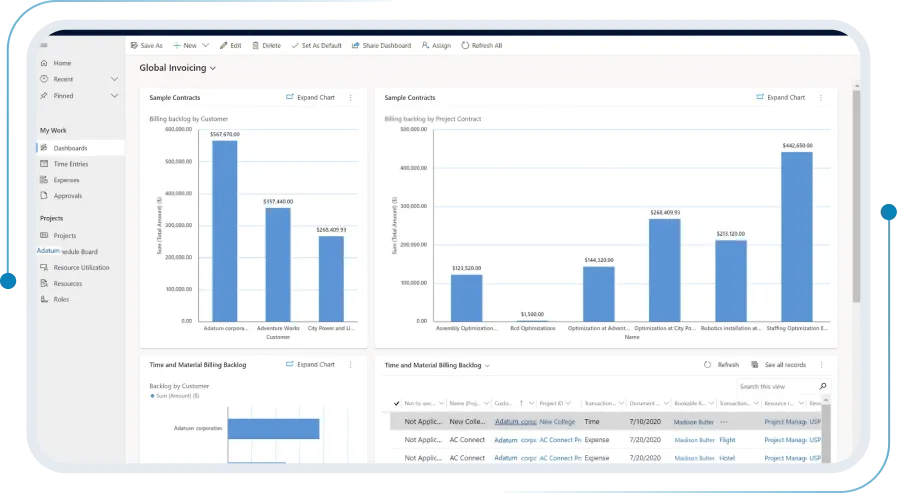
Delivers real-time insights and dashboards powered by Microsoft Power BI, enabling data-driven decision-making across the enterprise.

Integration with Microsoft Ecosystem
Seamlessly connects with Microsoft 365 and Microsoft Power Platform to enhance collaboration, workflow automation, and productivity.

AI and Automation Layer
Leverages Microsoft Copilot to deliver intelligent recommendations, automate routine tasks, and improve operational efficiency.
By bringing these components together within a unified, cloud-based platform powered by Microsoft Azure, organizations gain a comprehensive view of project performance, financial health, and resource utilization. This integrated approach enables smarter decision-making, stronger governance, and the ability to scale operations with confidence in an increasingly competitive, project-driven economy.
Benefits of adopting Dynamics 365 Project Operations
Organizations adopting Microsoft Dynamics 365 Project Operations gain measurable, enterprise-grade benefits:

Real-time visibility into project performance and financial health

Automation of manual processes to reduce operational overhead

Faster, data-driven decision-making across leadership teams

Improved collaboration across project, finance, and operations teams

Scalable cloud architecture powered by Microsoft Azure

Enhanced governance, compliance, and audit readiness

Lower total cost of ownership through system consolidation

Improved project profitability and resource efficiency

As a leading project and resource management software, it empowers organizations to align execution with strategy while driving operational excellence.
Client success stories with sa.global
The National Food Lab
Result: Transformed employee experience with a unified project operations platform powered by Dynamics 365 Project Operations.
Impact: Centralized project delivery, resource management, and financial processes, improving collaboration, standardizing workflows, and enhancing visibility across customer engagements.
Discover how The National Food Lab elevated employee experience and project delivery →
Global Professional Services Firm (PMA Migration)
Result: Reduced migration timelines from months to days with sa.global’s rapid migration framework.
Impact: Eliminated manual data migration, minimized business disruption, and enabled immediate access to unified project, financial, and operational data.
See how this firm accelerated its transition from PMA to a modern project-based ERP →
Across industries, sa.global clients consistently achieve measurable improvements in efficiency, profitability, and operational visibility with Dynamics 365 Project Operations.
Licensing and cost overview of Microsoft Dynamics 365 Project Operations
The cost of Microsoft Dynamics 365 Project Operations varies based on several factors, including:
- Licensing model and user roles
- Selected modules and features
- Integration requirements
- Deployment scale and complexity
Organizations typically begin with a solution assessment to define requirements, align business objectives, and design an optimized licensing strategy.
Why partner with sa.global?
As a trusted Microsoft Dynamics 365 Project Operations implementation partner, sa.global helps organizations deploy and optimize Project Operations for their unique needs.

Recognized Microsoft solutions partner with deep expertise in Dynamics ecosystem

Global delivery model supporting enterprise-scale implementations

Proven industry experience across project-based organizations

Accelerated implementation frameworks to reduce time-to-value

Outcome-driven methodology focused on measurable business impact

24/7 managed services for continuous optimization and support
FAQs
What is Microsoft Dynamics 365 Project Operations used for?
Microsoft Dynamics 365 Project Operations is used to manage end-to-end project delivery, including planning, resource allocation, financials, and analytics within a unified platform. As a comprehensive project and resource management software, it helps organizations streamline operations and improve project profitability.
How does Dynamics 365 Project Operations improve business operations?
Microsoft Dynamics 365 Project Operations improves business operations by connecting project execution with financial management and automating key workflows. As a project-based ERP software, it enables real-time visibility, better forecasting, and data-driven decision-making across the enterprise.
Is Microsoft Dynamics 365 Project Operations suitable for mid-sized organizations?
Yes, Microsoft Dynamics 365 Project Operations is highly scalable and suitable for both mid-sized and large enterprises. It provides flexible project and resource management software capabilities that grow with the organization’s operational and financial complexity.
How long does Dynamics 365 Project Operations implementation take?
The implementation timeline for Microsoft Dynamics 365 Project Operations depends on business requirements, integrations, and data migration complexity. With the right partner, organizations can deploy this project-based ERP software in a phased approach to accelerate time-to-value.
Does Microsoft Dynamics 365 Project Operations integrate with Microsoft tools?
Yes, Microsoft Dynamics 365 Project Operations integrates seamlessly with Microsoft 365, Microsoft Power Platform, and Microsoft Azure. This integration enhances collaboration, automation, and analytics across the project and resource management software ecosystem.
Can organizations migrate from legacy systems to Microsoft Dynamics 365 Project Operations?
Yes, organizations can migrate from legacy systems to Microsoft Dynamics 365 Project Operations using structured migration frameworks and tools. This transition to a modern project-based ERP software enables unified data, improved governance, and enhanced operational efficiency.
What support is available after implementation?
Post-implementation, organizations receive ongoing support including managed services, system optimization, and continuous updates for Microsoft Dynamics 365 Project Operations. This ensures the project and resource management software continues to deliver value, scalability, and performance over time.
Is Microsoft Dynamics 365 Project Operations a project-based ERP software?
Yes, Microsoft Dynamics 365 Project Operations is a robust project-based ERP software that unifies project management, financials, and operational processes. It also functions as advanced project and resource management software, enabling organizations to manage complex project lifecycles with greater control and intelligence.